

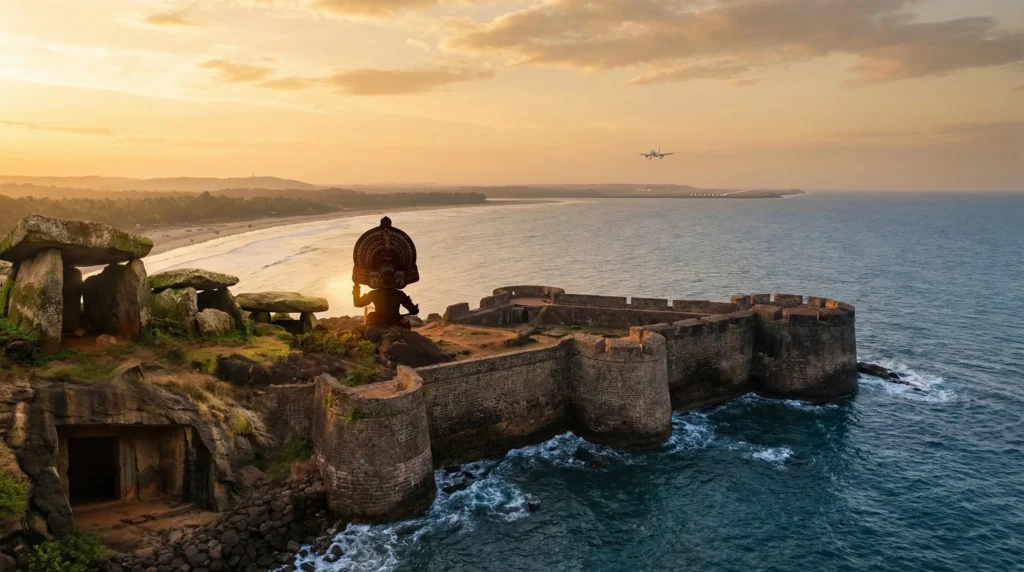
Have you ever thought about how Kannur changed from an ancient coastal land into a modern district with an international airport?
If you are a tourist, a local reader, or someone curious about North Kerala, understanding the history of Kannur district helps you see its forts, rituals, towns, and people in a new way.
The history of Kannur starts from prehistoric settlements and early Dravidian culture, grows through Chera, Kolathiri, and Arakkal rule, passes through Portuguese, Dutch, and British control, and continues after 1957 as a district shaped by education, migration, transport, and tourism till 2026. The name Cannanore came from European spelling of the local name Kannanur.
Where Kannur Is Located and Why History Shaped It
Kannur lies in northern Kerala, India, along the Malabar Coast of the Arabian Sea.
This coastal position made Kannur important for:
- Sea trade
- Contact with Arabia and Persia
- Control of northern Malabar
Because of this, Kannur appears often in the history of Malabar.
Ancient History of Kannur (Prehistoric to Early Historic Period)
Prehistoric Evidence
Kannur has strong proof of early human life.
- Rock-cut caves
- Megalithic burial sites
- Stone circles and urn burials
Important areas include Taliparamba and parts of Iritty and Aralam.
Source: Archaeology Department, Government of Kerala
These findings show that people lived here thousands of years before written history.
Kannur During the Chera Period (1st–5th Century CE)
During early historic times, Kannur was part of the Chera Kingdom.
- Chera rulers controlled trade routes along the coast
- Pepper and spices moved through nearby ports
- Roman and Arab traders had contact with Malabar
Trade Fact
Roman gold coins have been found in Kerala, showing overseas trade.
Source: Archaeological Survey of India (ASI)
Kolathunadu: Rise of a Regional Power (9th–15th Century)
Kolathiri Rajas
Later, Kannur became the centre of Kolathunadu, ruled by the Kolathiri family.
- Kolathiri rulers controlled land from present Kannur to Kasaragod
- They maintained naval links with Arab traders
- Temples like Raja Rajeswara Temple, Taliparamba gained royal support
This period shaped much of the local history of Kannur.
Arakkal Kingdom: Kerala’s Only Muslim Royal House
Kannur holds a special place in Kerala history because of the Arakkal Kingdom.
- The Arakkal family ruled parts of Kannur and Lakshadweep
- They followed matrilineal traditions like other Kerala royal families
- Strong links with maritime trade
The Arakkal Palace later became a museum.
Why Kannur Was Called “Cannanore”
Name Origin Explained Simply
- Original name: Kannanur
- Kannan = Lord Krishna
- Ur = place
- Portuguese traders wrote it as Cannanore
- British rulers kept the same spelling
This is why:
- Old maps say Cannanore
- Railway and military records use Cannanore
Official Change
- In 1949, the Indian government restored the local name
- Cannanore officially became Kannur
European Rule and the Fort Era
Portuguese Period
In 1505, the Portuguese built St. Angelo Fort.
- Built by Dom Francisco de Almeida
- Protected spice trade and sea routes
Dutch and British Period
- Dutch captured the fort in 1663
- Fort sold to Arakkal rulers in 1772
- British took control in 1790
The British used Kannur as:
- A military station
- An administrative centre
Kannur Under British Malabar
During British rule:
- Kannur was part of the Malabar District under Madras Presidency
- Roads, courts, and railways were introduced
- Political awareness increased
Kannur later became known for strong public involvement in politics.
Freedom Movement and Social Change
- Students, workers, and local leaders joined national movements
- Trade unions and reading rooms became common
- Public discussions shaped future leadership
This social base later influenced post-independence Kerala.
Formation of Kannur District (1957)
A New Administrative Unit
- Kannur district was formed on 1 January 1957
- Created after Kerala state formation
- Included Taliparamba, Thalassery, Iritty, and nearby areas
Source: Government of Kerala, 1957
Kannur After 1957: Decade-by-Decade Growth
1957–1970: Foundation Years
- Land reforms improved farmer rights
- School education expanded
- Road connectivity improved
1970–1990: Education and Literacy
- Growth of government colleges
- High literacy compared to India
Literacy Data
Kerala reached about 95.1% literacy by 2011.
Source: Census of India, 2011
1990–2005: Gulf Migration Period
- Large-scale migration to Gulf countries
- Remittances improved housing and healthcare
- Handloom and beedi industries reduced
Economic Data
Kerala received over ₹24,000 crore in remittances by 2004.
Source: Kerala Migration Survey, CDS (2004)
2006–2018: Transport and Airport
- Better highways and rail links
- Tourism awareness increased
In December 2018, Kannur International Airport opened.
- Fourth international airport in Kerala
- Direct flights to Gulf countries
- 7% passenger growth in 2024
- 14% growth in international passengers
- 3,950 metric tonnes cargo handled
- 12% cargo growth year-on-year
2019–2026: Modern Kannur
- Growth in tourism and medical services
- Post-COVID domestic travel increased
- Global attention to Muzhappilangad Beach
- Theyyam gained international cultural interest
Tourism Data
Kerala recorded 4.5 crore domestic tourists in 2024.
Source: Kerala Tourism Statistics, 2024
Key Timeline: Ancient to 2026
| Period | Event |
| Prehistoric | Megalithic settlements |
| 1st–5th CE | Chera Kingdom |
| 9th–15th CE | Kolathiri rule |
| 1505 | St. Angelo Fort built |
| 1790 | British control |
| 1949 | Cannanore renamed Kannur |
| 1957 | Kannur district formed |
| 2018 | International airport |
| 2026 | Tourism-led growth |
Malayalam Summary: History of Kannur (ചുരുക്കം)
കണ്ണൂരിന്റെ ചരിത്രം പുരാതന കാലഘട്ടത്തിലെ ശിലായുഗ മനുഷ്യവാസത്തിൽ നിന്നാണ് ആരംഭിക്കുന്നത്.
ചേര രാജവംശകാലത്ത് കണ്ണൂർ കടൽവ്യാപാരത്തിന് പ്രധാന കേന്ദ്രമായിരുന്നു. പിന്നീട് കൊളത്തിരി രാജാക്കന്മാരുടെ ഭരണത്തിൽ കൊളത്തുനാട് ശക്തമായ പ്രദേശമായി മാറി.
അരക്കൽ രാജവംശം കേരളത്തിലെ ഏക മുസ്ലിം രാജവംശമായി കണ്ണൂരിൽ ഭരണകൂടം സ്ഥാപിച്ചു.
പോർച്ചുഗീസ്, ഡച്ച്, ബ്രിട്ടീഷ് ഭരണകാലങ്ങളിൽ സെന്റ് ആൻജലോ കോട്ട പ്രധാന സൈനിക കേന്ദ്രമായി.
1957-ൽ കണ്ണൂർ ജില്ല രൂപീകരിച്ചു.
ഗൾഫ് കുടിയേറ്റം, വിദ്യാഭ്യാസ വളർച്ച, 2018-ൽ ആരംഭിച്ച കണ്ണൂർ അന്താരാഷ്ട്ര വിമാനത്താവളം, വിനോദസഞ്ചാരം എന്നിവ കണ്ണൂരിനെ ആധുനിക ജില്ലയായി മാറ്റി.
FAQ: History of Kannur District
1. Kannur was earlier known as what?
Cannanore, based on European spelling of Kannanur.
2. When was Kannur district formed?
1 January 1957.
3. Which kingdoms ruled Kannur?
Chera, Kolathiri, Arakkal, then European powers.
4. Why is St. Angelo Fort important?
It shows colonial control over Malabar trade.
5. What changed Kannur after 1990?
Gulf migration and remittances.
6. Why is Kannur important today?
Tourism, airport access, culture, and heritage.
Conclusion
The history behind Kannur is a long journey from stone-age life to a connected modern district.
Forts, palaces, rituals, and beaches together tell this story.
Visit Cannanoretourism to Know more about Kannur