Kottiyoor Vysakha Mahotsavam 2026: May 23 – June 24, 2026Women’s Entry (Akkare Kottiyoor): May 30 (midnight) – June 20, 2026 (until noon) · Neyyattam: May 29 · Thrikkalashaattu: June 24
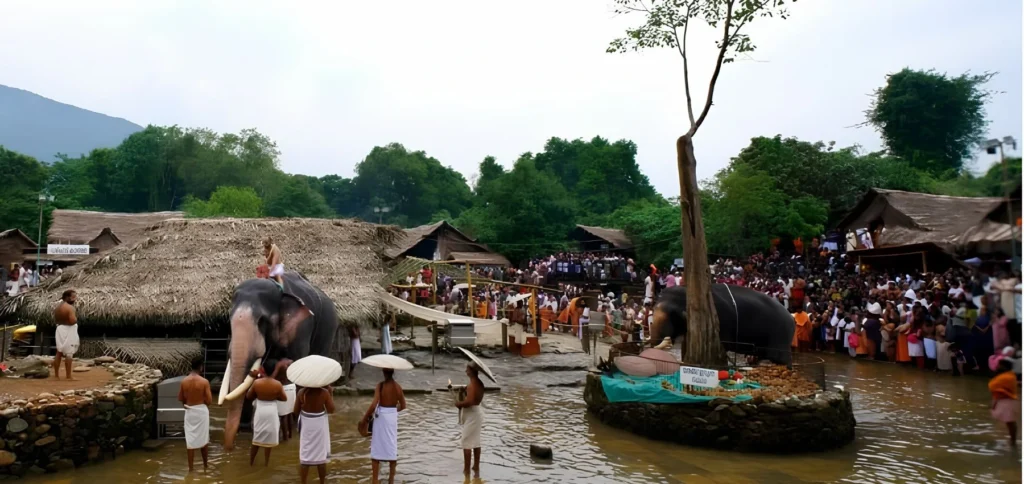
Every year, for just 28 days, a forest wakes up. On the eastern bank of the Bavali River, deep inside the hills of Kannur’s Western Ghats, a shrine appears where there was only wilderness — palmyra-thatched huts rise from the ground, priests wade through sacred water at dawn, and over one lakh devotees walk barefoot through a living river to stand before a stone that has no ceiling, no golden dome, no temple tower. Just a Swayambhu Shiva Linga on a platform of river rocks, in a forest pond, under the open Kerala sky.
This is Kottiyoor Vysakha Mahotsavam — arguably the most extraordinary temple festival in all of South India, and one that pilgrims describe not as a visit but as a disappearance: from ordinary life, from digital noise, from everything that isn’t ancient and alive and real.
In 2026, the festival runs from May 23 to June 24. If you’re planning to attend — or simply want to understand what happens inside a forest that becomes a temple — this is your complete guide.
“Walking barefoot through the Bavali River, feeling the cold current around your ankles, looking up to see the forest close in on both sides — before you even reach the shrine, you already know you’ve arrived somewhere that cannot be found on any map.”— A devotee’s account, widely shared on Kerala pilgrimage forums
What is Kottiyoor Vysakha Mahotsavam?
The Kottiyoor Vysakha Mahotsavam is a 28-day annual Hindu pilgrimage festival held at Akkare Kottiyoor — the eastern, seasonal shrine of the twin-temple complex at Kottiyoor in Kannur district, Kerala. It is celebrated during the Malayalam months of Edavam and Midhunam (May–June), beginning on the Chothi asterism day and concluding on the Chithira asterism day.
The festival commemorates the Daksha Yaga, the mythological fire sacrifice where Sati Devi self-immolated and Lord Shiva’s grief turned the cosmos upside down — an event believed to have occurred on this very ground, thousands of years ago. Unlike festivals elsewhere that use myth as backdrop, Kottiyoor re-enacts these events through rituals performed with meticulous precision, unchanged since Shankaracharya codified them in the 8th century.
What makes Kottiyoor unlike any other pilgrimage in India is its deliberate impermanence. Akkare Kottiyoor has no permanent structure — no walls, no sanctum, no roof. The deity is a Swayambhu Linga (a self-manifested Shiva Linga) sitting on a platform of river stones called Manithara, surrounded by the Thiruvanchira pond, open to the sky and the monsoon rain. The festival structures are erected fresh every year from palmyra leaves and wood, then dismantled after the closing ritual. The forest reclaims the space until the next year.
This is not just spiritual theatre. It is, as scholars of Hinduism note, one of the most authentic surviving examples of Vedic open-air worship — a living relic of a time before stone temples were built, when divinity was encountered in forest and river and sky.
Quick Facts
Official Name: Kottiyoor Vaishaka Mahotsavam / Kottiyoor Ulsavam
Venue: Akkare Kottiyoor Temple (eastern bank of Bavali River), Kottiyoor, Kannur, Kerala
Duration: 28 days
Deity: Lord Shiva — Swayambhu Linga at Manithara
Governed by: Kottiyoor Devaswom Board (Malabar Devaswom Board)
Attendance: 1 lakh+ devotees annually
Admission: Free. All are welcome. Strict dress code applies.
Photography: Strictly prohibited inside the shrine enclosure
Kottiyoor Vysakha Mahotsavam 2026 — Official Dates & Schedule
The Kottiyoor Vysakha Mahotsavam 2026 begins on May 23, 2026 and concludes on June 24, 2026. The festival opens with the Neyyattam ritual on May 29 — the day the Swayambhu Linga receives its first ghee abhishekam of the season — and closes with the Thrikkalashaattu ceremony on June 24, after which Akkare Kottiyoor returns to forest seclusion until 2027.
During the festival period, Ikkare Kottiyoor (the permanent western-bank temple) remains closed. All divine focus, ritual activity, and pilgrim movement shifts entirely to the eastern forest shrine.
May 23 – Friday
Festival Opens : Akkare Kottiyoor officially opens to devotees. The forest shrine comes alive.
May 29 – Friday
Neyyattam (Ghee Abhishekam): Opening major ritual — the Swayambhu Linga is bathed in pure ghee. A sacred sword arrives from Muthirerikavu, Wayanad, marking the formal commencement of yajna activities.
May 30 – Saturday
Bhandaram Ezhunnallath : Gold and silver vessels, ornaments, and pooja items in grand procession from Manathana village to Kottiyoor. Women’s entry to Akkare begins from midnight.
May 30 (midnight) to June 20 (noon)
Women’s Entry Window — Akkare Kottiyoor : Official dates per Kottiyoor Devaswom Board. Traditional saree / pavada mandatory. Salwar and modern dress not permitted.
June 7–8
Elaneer Vayppu — The Coconut Offering: Thousands of tender coconuts carried from across Malabar are offered before the Swayambhu Linga. The forest floor is said to disappear beneath the coconuts.
June 8 – Monday
Elaneerattam (Rashi Velli) + Ashtami Aradhana: The head priest pours coconut water collected in gold and silver pots over the Shiva Linga. One of the most sacred rituals of the entire festival.
During festival
Rohini Aaradhana: The Kurumathur Brahman (embodiment of Vishnu) embraces the Swayambhu Shiva Linga — re-enacting Vishnu’s act of pacifying Shiva after Sati’s death. Found in no other temple in India.
During festival
Ezhunnallippu (Grand Procession): Idols of Lord Shiva and Goddess Parvati carried on caparisoned elephants with traditional Panchavadyam music.
During festival
Aanayootu: Ceremonial feeding of elephants — a ritual honouring their role in sacred festival processions.
June 20 – Saturday (noon)
Women’s Entry Closes: Women must exit Akkare Kottiyoor by noon. Entry is not permitted after this time.
June 23 – Tuesday
Atham Chatusshatham, Vaalattu, Kalashapuja: Pre-closing rituals — kalasha (sacred pot) worship and ceremonial sword procession.
June 24- Wednesday
Thrikkalashaattu — Festival Closes: The closing ceremony. Akkare Kottiyoor returns to forest solitude. The shrine dismantled, the forest reclaims its space until Vysakha 2027.
Note on Dates
Festival dates in Kerala are determined by the Malayalam calendar and star (nakshatra) positions. The dates above reflect confirmed information from the Kottiyoor Devaswom Board as notified for 2026. Minor adjustments can occur per temple custom. Always verify the final schedule at kottiyoordevaswom.com before travel.
The Story Behind the Festival: The Daksha Yaga
To understand Kottiyoor Vysakha Mahotsavam, you have to go back — far back — to one of the most pivotal stories in Hindu mythology.
Daksha Prajapati, a powerful king of the divine realm and father of Sati Devi, despised his son-in-law Lord Shiva. He considered Shiva — the ascetic, the wanderer, the one who smeared ash over his body and kept serpents as ornaments — unworthy of his royal lineage. So when he organised a grand yajna (fire sacrifice) at this very site in the forest of Kottiyoor, he deliberately excluded Shiva and Sati from the invitation.
Sati, hearing of her father’s yajna, went uninvited. She arrived to witness herself publicly insulted by her own father — her husband’s name dragged through the assembled gathering of gods and sages. The humiliation was unbearable. She immolated herself in the sacrificial fire using her yogic power — not as an act of defeat, but of profound protest. Her love for Shiva was her entire identity, and her father had mocked it.
What followed was one of mythology’s most terrifying episodes. Lord Shiva, learning of Sati’s death, performed the Thandava Nritham — the cosmic dance of destruction — in his manifestation as Veerabhadra. He beheaded Daksha, destroyed the yajna. The universe trembled. Later, when Lord Vishnu pacified Shiva through an act of Aalinganam (embrace of the Shiva Linga), the grief began to recede. Daksha was restored with a goat’s head and became a devotee of the god he had scorned.
The Rohini Aaradhana ritual — where the Kurumathur priest embraces the Swayambhu Linga — is a direct re-enactment of Vishnu’s act of pacification. It is performed nowhere else in India.
The place where the gods congregated — Brahma, Vishnu, and Shiva — came to be called Koodiyoor (place where they came together), which over centuries became Kottiyoor.
The Sacred Rituals of Vysakha Mahotsavam — Explained
Every ritual at Kottiyoor has been performed in the same sequence, in the same manner, for centuries. There are no modern additions, no amplified music, no light shows. Just ancient precision — Vedic hymns, fire, water, ghee, and coconut.
Neyyattam
The first and opening major ritual — abhishekam of the Swayambhu Linga with pure ghee (neyy). Begins with a sword arriving from Muthirerikavu, Wayanad. The ghee is poured as devotees chant. The scent of warm ghee in cool forest air is said to be overwhelming.
Bhandaram Ezhunnallath
On the Visakham star day, gold and silver vessels, ornaments, and sacred pooja items travel in procession from Manathana village to Kottiyoor. A ceremonial event that draws enormous crowds along the route.
Elaneer Vayppu
Thousands of tender coconuts — carried from districts across Malabar by devotees as an act of devotion — are submitted before the Swayambhu Linga. The sheer volume of coconuts is staggering. Each one is an act of individual faith, collectively transforming the forest floor.
Elaneerattam (Rashi Velli)
The head priest pours coconut water collected in pure gold and silver vessels over the Shiva Linga. Also called Rashi Velli. This ritual follows Elaneer Vayppu and is the festival’s most spectacular purification rite.
Rohini Aaradhana
The Kurumathur Brahman — the senior-most member of a Vaishnavite family considered the embodiment of Vishnu for this ritual — embraces the Swayambhu Shiva Linga as a living re-enactment of Vishnu pacifying the grieving Shiva. Unique in all of Hinduism.
Ezhunnallippu
The grand procession — idols of Lord Shiva and Goddess Parvati carried on caparisoned elephants, accompanied by Panchavadyam (traditional Kerala temple orchestra). One of the most visually dramatic events of the festival.
Aanayootu
The ceremonial feeding of elephants — a ritual of gratitude and honour for the elephants that participate in the processions. A gentle, moving ceremony within the larger festival.
Thrikkalashaattu
The closing ceremony — a kalasha (sacred pot) ritual that formally concludes 28 days of continuous worship. After Thrikkalashaattu, the thatched structures are dismantled and Akkare Kottiyoor returns to the forest for another year.
Odapoo — The Sacred Prasadam of Kottiyoor
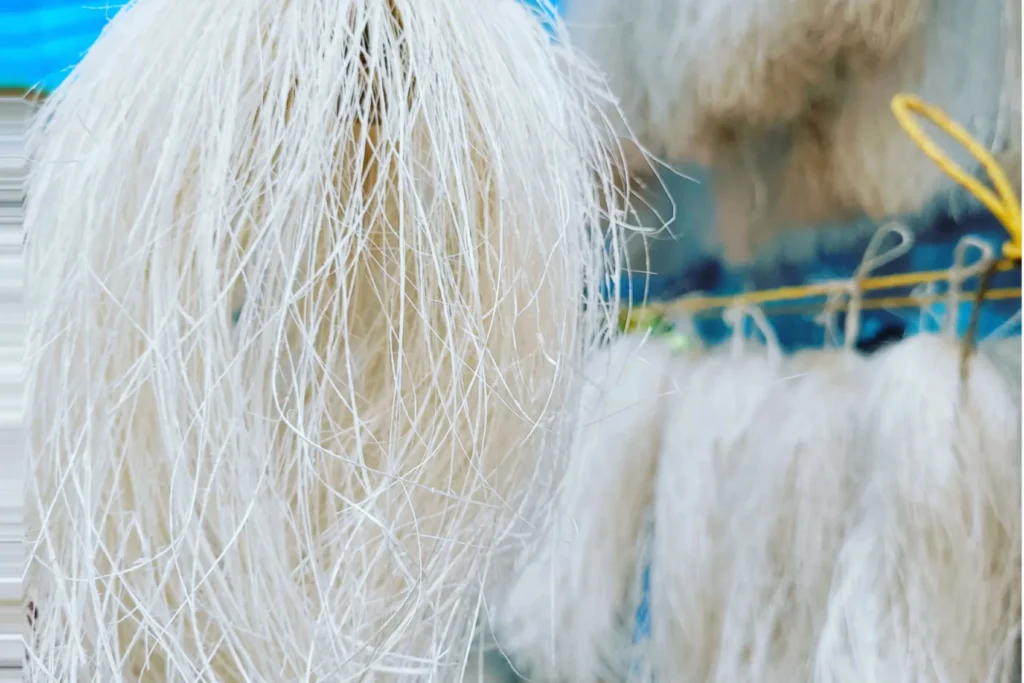
Among the most distinctive traditions of the Vysakha Mahotsavam is Odapoo — an artificial flower crafted from bamboo or reed fibre, shaped into long, white, tassel-like strands that resemble a flowing white beard. Offered to Lord Shiva during the festival, Odapoo is taken home by devotees as a sacred prasadam and blessing.
Symbolically, Odapoo is linked to the sage Bhrigu’s beard — torn off during the chaos of the Daksha Yaga — making it one of the most mythologically specific prasadams in Kerala’s temple tradition. You will see devotees carrying Odapoo home carefully, preserving it as a divine souvenir long after the festival ends.
The River Crossing: Barefoot Through the Bavali
To reach Akkare Kottiyoor, you cross the Bavali River on foot. Barefoot. Through the current.
The Bavali River flows from the deep valleys and medicinal herb-rich forests of Wayanad and the Western Ghats. By the time the Vysakha Mahotsavam season arrives, the pre-monsoon rains have already begun filling it. The river is cool and clear, its stones smooth beneath the feet of pilgrims who have been making this same crossing for centuries.
Many devotees drink the water, believing it carries the medicinal properties of the herbs through which it has flowed. In the local tradition, even today, the waters of the Bavali are considered amrit — divine nectar.
The monsoon rains that lash Kottiyoor during the festival are believed locally to be the tears of Lord Shiva — still weeping for Sati, centuries later. To stand in that rain, beside that river, before that stone, is to understand why this place has never needed a building.
The crossing is not a formality — it is the beginning of worship. By the time you wade through the Bavali and step onto the eastern bank, something has already shifted. The forest absorbs the sounds of the world you left behind. The thatched shrines come into view. Ahead is the Thiruvanchira pond, the Manithara platform, and the Swayambhu Linga — with no walls between you and it but the open sky.
Women at Kottiyoor — 2026 Entry Dates & Rules
2026 Women’s Entry — Official Dates
Entry permitted: May 30, 2026 (from midnight) to June 20, 2026 (until noon)
As per: Official notification, Kottiyoor Devaswom Board
Dress mandatory: Saree or traditional Pavada. Salwar kameez and modern attire are not permitted. Women must cross the Bavali River on foot and follow all temple customs.
Women are permitted to visit Akkare Kottiyoor during a specific lunar window each year, determined by the Devaswom Board. In 2026, this window opens at midnight on May 30 and closes at noon on June 20. Outside these dates, entry to the eastern shrine is restricted for women.
Ikkare Kottiyoor — the permanent western-bank temple — is however closed during the entire festival season. Women wishing to visit the Kottiyoor complex during the festival must plan their visit within the approved window.
Dress Code at Kottiyoor — No Exceptions
Kottiyoor maintains one of the strictest dress codes of any major temple festival in Kerala. These rules are enforced uniformly for all visitors — devotees, tourists, NRIs, and foreign guests alike.
For Men
Allowed
- White dhoti (mundu) required
- Bare-chested — no shirt, no vest
- Footwear removed before entry
Now allowed
- Shirts or t-shirts
- Shorts or trousers
- Sestern attire of any kind
For Women
Allowed
- Saree is the standard
- Pavada (traditional skirt)
- Light cotton saree recommended (humid)
Not allowed
- Footwear removed before entry
- Salwar kameez
- Jeans, shorts, modern dress
Plan for the river crossing — wear light cotton that can get wet and dry quickly. Footwear must be left at the designated racks on the riverbank before you enter the water. Photography and videography are strictly prohibited inside the shrine enclosure. Temple authorities enforce this firmly.
How to Reach Kottiyoor for the 2026 Festival
By Air
Kannur International Airport (CNN) — ~55 km, approx. 1.5 hrs by road. Taxis readily available. Calicut Airport (CCJ) is an alternative at ~125 km.
By Train
Thalassery Railway Station — ~60 km (nearest). Kannur (CAN) — ~70 km. KSRTC buses and taxis connect both stations to Kottiyoor.
By Bus
KSRTC and private buses from Kannur, Thalassery, Mananthavady, Kozhikode. Extra festival-season services run during May–June. Check current schedules at Kannur KSRTC depot.
Self Drive
From Kannur city: ~63 km via Malayora Highway (1.5–2 hrs). From Bengaluru: ~300 km via Mananthavady. From Kozhikode: ~100 km via Thalassery–Iritty. Parking available at temple.
Where to Stay During Kottiyoor Festival 2026
Accommodation near Kottiyoor fills up months in advance during festival season. Plan and book early — ideally 2–3 months before your visit date.
Options Near the Temple
Kottiyoor Devaswom Guesthouses — the closest option to the shrine. Book through the official Devaswom portal or counter. Limited rooms; very high demand. Kottiyoor Gardens and a handful of small lodges in Kottiyoor village offer basic accommodation from around ₹100–₹500 per night during the festival.
Options in Nearby Towns
Iritty (~25 km): Best for mid-range hotels with good connectivity. Comfortable for families. Payyanur (~45 km): More options, slightly farther. Thalassery (~60 km): Good range of hotels, excellent local cuisine. Kannur city (~65–70 km): Widest range — budget to luxury, excellent connectivity, and a great base for visiting multiple North Kerala attractions alongside Kottiyoor.
First-time visitors’ recommendation: Stay in Kannur city and hire a taxi for a day trip to Kottiyoor. Leave by 5:00 AM to reach the shrine before crowds peak at mid-morning.
Practical Tips for Pilgrims & First-Time Visitors
Arrive early. The temple area gets intensely crowded from mid-morning onwards, especially on major ritual days. Aim to cross the Bavali River by 6:00–7:00 AM for the most peaceful darshan experience.
Carry cash. The Kottiyoor area has very limited ATMs and digital payment infrastructure. Carry enough cash for vazhipadu (ritual offerings), food, and transportation.
Dress before you leave. There are no changing rooms near the riverbank. Arrive dressed in the required attire. Men should wear their mundu from the point of departure; women should come in their saree.
Carry light. You will wade through a river. Heavy bags, expensive electronics, and non-waterproof items are a liability. Leave non-essentials at your accommodation.
No photography — genuinely. Photography is not just discouraged; it is prohibited and enforced. The experience of Kottiyoor requires your full presence anyway. The shrine has no walls. The forest is the frame.
Stay hydrated. The combination of humid forest air, wading through water, and walking on uneven ground can be physically demanding, especially for older devotees. Carry a water bottle (not inside the shrine enclosure).
Check weather. The Vysakha Mahotsavam coincides with the pre-monsoon and early monsoon period in Kerala. Expect rain — sometimes sudden and heavy. Light cotton that dries quickly is your best clothing choice.
The monsoon rains at Kottiyoor are not an inconvenience. They are the event. To stand in the rain before the open-air Shiva Linga is to understand why people have been coming here for centuries, and why no one has ever thought to build a roof.
Why Kottiyoor is Worth the Journey
Kerala has hundreds of temples. It has grand festivals, elaborate processions, temples of gold and ancient stone. But Kottiyoor is something else — it is the only major Hindu pilgrimage in India where the primary shrine is deliberately kept in a state of sacred wilderness, where the architecture is trees and river and monsoon sky, where the deity has no shelter because the entire forest is its home.
The Vysakha Mahotsavam is not about spectacle. There are no light shows, no amplified film music, none of the commercial energy that surrounds most large Indian festivals. The rituals are Vedic. The atmosphere is austere. The forest absorbs noise. What remains is something quiet and enormous — the sense that you are in a place where something ancient is still happening, unbroken, year after year, century after century.
That is what draws one lakh devotees to a remote forest in Kannur every May–June. Not the convenience. Not the luxury. But the rawness of an encounter with divinity that requires crossing a river barefoot, giving up your shoes and your shirt, and standing with nothing between you and the sacred but the open sky.
If you are visiting Kannur this season — even if a pilgrimage was not your plan — consider making the drive east into the hills. Kottiyoor during the Vysakha Mahotsavam is one of the most genuinely extraordinary things to experience in Kerala. It is not a tourist attraction. It is a living tradition. And in 2026, it runs from May 23 to June 24.
Frequently Asked Questions — Kottiyoor 2026
Can women attend the Kottiyoor festival in 2026?
Yes. Women are permitted inside Akkare Kottiyoor from May 30 (midnight) to June 20, 2026 (until noon), as per the official Devaswom Board notification. Traditional saree or pavada is mandatory. Salwar and modern dress are not permitted.
What is the dress code for Kottiyoor Vysakha Mahotsavam?
Men must wear a dhoti/mundu and must be bare-chested (no shirts or vests permitted inside). Women must wear a saree or traditional pavada. All devotees must remove footwear before entering the temple grounds. Salwar, jeans, shorts, and western clothing are prohibited.
Is photography allowed at Kottiyoor during the festival?
No. Photography and videography are strictly prohibited inside both shrines — Akkare and Ikkare Kottiyoor. This is enforced by temple staff. Violators may be asked to leave.
How do I reach Kottiyoor from Kannur during the festival?
Kottiyoor is approximately 60–70 km from Kannur city (1.5–2 hours by road). KSRTC and private buses operate from Kannur bus stand, with extra festival-season services. Taxis and hired vehicles are available. Kannur International Airport is ~55 km from the temple.
Can non-Hindus and foreigners attend the Kottiyoor festival?
Yes. Kottiyoor is generally open to all, including foreigners and non-Hindus, provided dress code requirements are followed. Carry a passport or valid ID. All visitors — regardless of background — must respect temple customs, dress code, and photography restrictions.
How do I book accommodation for Kottiyoor festival 2026?
For accommodation near the temple, contact the Kottiyoor Devaswom Board directly at kottiyoordevaswom.com. For Iritty, Thalassery, and Kannur hotels, book through standard platforms. Book at least 2–3 months in advance — rooms fill quickly during festival season.
What is Odapoo at Kottiyoor?
Odapoo is an artificial flower made from bamboo or reed fibre, resembling long white tassel strands. It is offered to Lord Shiva during the Vysakha Mahotsavam and taken home by devotees as sacred prasadam. It is symbolically linked to the sage Bhrigu’s beard from the Daksha Yaga legend and is one of the most unique prasadams in Kerala’s temple tradition.
When does Ikkare Kottiyoor (the permanent temple) reopen?
Ikkare Kottiyoor closes during the Vysakha Mahotsavam festival season and reopens after the Thrikkalashaattu closing ceremony on June 24, 2026. It then operates year-round until the next festival season.
Planning Your Kottiyoor Pilgrimage?
Explore our complete Kottiyoor Temple guide, Kannur travel tips, and North Kerala itineraries on Cannanore Tourism.